

If you have ever dug a post hole on a Montgomery, TX property after a rain, you already know what you are dealing with: dense, sticky clay that holds water long after the surface looks dry. B&A Farms is based in Magnolia, TX, and that same clay profile runs through the entire region, from the subdivisions off FM 1488 to the larger commercial corridors near Lake Conroe. That soil profile matters a great deal when you are sourcing and installing balled and burlapped trees montgomery tx contractors are ordering for summer projects right now. The decisions you make at the sourcing stage will either work with that soil or fight it for years.
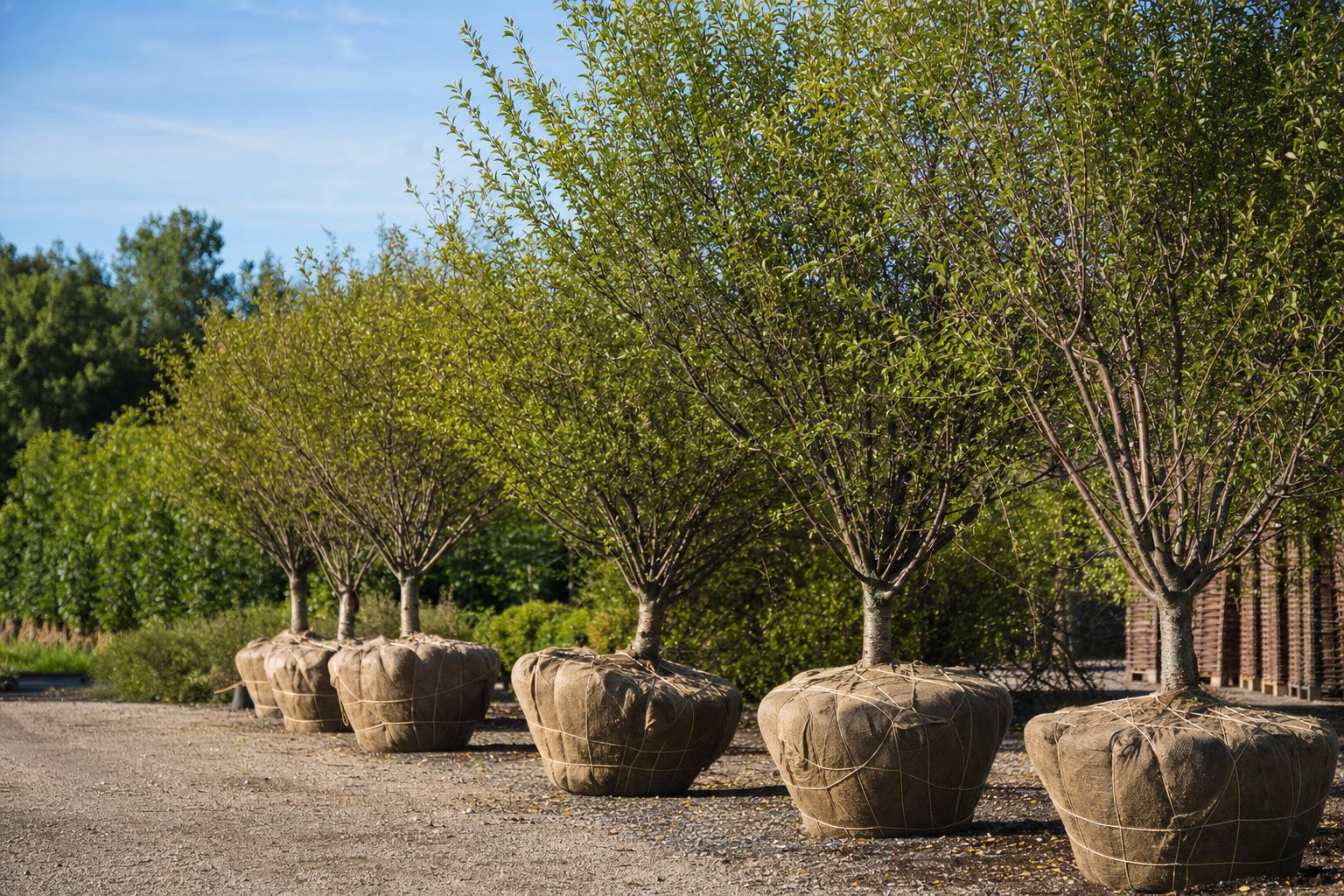
1. Montgomery County Clay Changes How You Size the Root Ball
The heavy clay soils common across Montgomery, TX and the surrounding Lake Conroe corridor do not drain the way sandier soils do. A root ball sized for fast-draining soil can sit too wet in a clay-heavy site, stressing the tree before it ever gets established. Our team recommends sizing up on caliper and selecting trees with tighter, more compact root balls when planting into Montgomery County clay, so the tree has less backfill to manage during establishment.
2. Sourcing Balled and Burlapped Trees Montgomery TX Projects Require Is Not the Same as Buying Off a Lot
Contractors sourcing trees for subdivision entries, commercial landscapes, or large residential installs need consistent caliper, matched form, and reliable availability across a project timeline. Retail nursery lots rarely carry enough volume or uniformity to meet those specs. Our wholesale program is built specifically for that kind of project demand, with inventory managed to support multiple deliveries over the course of a job rather than a single pickup.
3. Summer Planting in This Region Is Possible, But Timing the Delivery Matters
June in Montgomery County means consistent heat and the possibility of afternoon thunderstorms that can delay installs by days. Coordinating your balled and burlapped trees montgomery tx delivery to align with your actual planting window, not just your order window, protects the root ball from sitting on a staging area in direct sun. Our tree delivery logistics are set up to work around contractor schedules and site conditions, not just warehouse availability.
4. Species Selection Should Reflect What Actually Grows Here
Live oak, Shumard red oak, bald cypress, and Southern magnolia are the workhorses of Montgomery County landscapes for good reason: they are adapted to the region’s heat, humidity, and soil variation. Choosing a species that performs well in the Hill Country or East Texas Piney Woods does not guarantee success in the clay-heavy, seasonally wet soils around Montgomery, TX. If you are not sure which species fits your specific site conditions, our team can walk through the project details with you before you commit to a species or caliper range. We also covered species selection in depth in our post on B&B shade trees for Magnolia’s natural landscape.
5. Burlap and Wire Basket Handling Requires a Real Plan on Clay Sites
On clay-heavy sites, improper removal or folding of burlap and wire baskets at planting can create a barrier that slows root expansion into already-dense soil. Our team’s standard practice is to remove the top third of the wire basket and pull back natural burlap once the tree is set in the hole, ensuring the root ball stays intact while still giving roots a clear path outward. Synthetic burlap, which does not decompose, needs to come out entirely. This step gets skipped more often than it should on busy job sites, and it shows up as transplant stress months later.
6. Planting Depth Is the Most Common Mistake We See on Montgomery County Jobs
The root flare, the point where the trunk widens at the base, needs to sit at or slightly above grade. In clay soils that drain slowly, planting even two inches too deep can keep the base of the trunk wet long enough to cause crown dieback within the first growing season. We have seen this pattern repeatedly on projects in the Montgomery and Conroe area where contractors are moving fast and the depth check gets rushed. A quick adjustment at planting is far less expensive than a tree replacement call six months later. Our post on why trees fail after planting goes deeper on this if you want the full breakdown.
7. Post-Plant Care in Summer Heat Requires a Watering Schedule, Not Just Watering
Balled and burlapped trees montgomery tx projects install during June need consistent, deep watering in the weeks after planting, not frequent shallow watering that only wets the surface. In Montgomery County’s heat, the goal is to keep the root ball moist without saturating the surrounding clay, which means watering slowly and deeply two to three times per week depending on rainfall. A simple watering schedule handed off to the property owner or maintenance crew at project completion prevents most of the summer establishment failures we get called about. Our newly planted shade tree care guide has a practical schedule you can share directly with clients.
For broader homeowner context, Arbor Day Foundation tree planting guidance and USDA Forest Service tree owner resources offer useful background on planning, safety, and maintenance decisions related to this kind of work.
Montgomery County’s summer project season moves fast, and the decisions made at sourcing and installation set the trajectory for how those trees perform for the next decade. If you are working on an active project in the Montgomery, TX area and need to talk through species, volume, or delivery timing, our team is ready. Reach out through our wholesale contact page and we will get back to you with specifics.

